REQUEST AN ESTIMATE TODAY! CONTACT
GALLERY
MY ACCOUNT


Frameless cabinets like this Cambridge Color, often called "European-style," are the secret behind many of today's most stunning, minimalist kitchens. The concept is simple: they are built without a front frame, which gives you complete, unobstructed access to everything inside. Doors and drawers mount directly onto the cabinet box itself, resulting in a sleek, seamless look with almost invisible gaps between them.
This modern design not only maximizes your storage space but also delivers that clean, contemporary aesthetic everyone is after.
When you picture a frameless cabinet, just think of a clean, sturdy box. It’s a beautifully simple idea. Traditional American-style cabinets have a "picture frame" (called a face frame) attached to the front, which slightly reduces the opening size. Frameless cabinets get rid of that extra layer entirely.
This one small change makes a world of difference. The whole point is efficiency—by ditching the face frame, every last inch of the cabinet's width becomes usable storage. To make this work, the cabinet box has to be extra robust, which is why it's typically built from thick ¾-inch material. This provides all the strength and stability needed to hang the doors and drawers directly on the sides of the box with concealed hinges.
While the design has been a staple in Europe for decades, its popularity has exploded in the U.S. In fact, frameless cabinets now account for 40-45% of all kitchen cabinet installations in the country, a huge jump from just a few years ago. You can find more details on this growing trend at globalwood.org.
So, what’s driving the shift? It's all about the growing demand for minimalist looks and smarter, more functional spaces. Homeowners and designers alike are falling for the clean lines and incredible practicality that define the frameless style.
The heart of frameless design is "full access." With no frame blocking your way, you get wider drawers that are easier to organize and effortless access to everything inside, from bulky stand mixers to tiny spice jars.
To help you get a quick handle on what makes them unique, here’s a simple breakdown of their key features.
This table gives you a quick snapshot of the defining characteristics of frameless cabinets.
As you can see, every aspect of frameless design is focused on creating a clean look while maximizing every inch of available space.
Choosing between frameless and framed cabinets is one of the biggest decisions you'll make in a kitchen remodel. It might seem complicated, but it gets a lot simpler when you put them side-by-side. By looking closely at how they’re built, how much they can hold, and the style they bring to a room, you can figure out which one is the perfect match for your project.
The biggest difference comes down to their basic anatomy. Framed cabinets have a solid wood frame, kind of like a picture frame, attached to the front of the cabinet box. This frame gives the cabinet extra rigidity and creates that classic, layered look many people love.
On the other hand, frameless cabinets are just a simple, solid box. There’s no face frame, which results in a minimalist aesthetic with clean, uninterrupted lines from one cabinet to the next.
There’s a common myth that frameless cabinets aren't as tough because they don't have that face frame. That’s just not the case. High-quality frameless cabinets are built to last, using thicker and more robust materials for the box itself—usually ¾-inch plywood or premium furniture-grade particleboard. This beefy construction makes them more than strong enough to support heavy countertops and stand up to years of daily use, as long as they’re installed correctly.
Framed cabinets get a lot of their structural backbone from that solid wood face frame. It helps keep the box perfectly square during shipping and installation, which can make them a bit more forgiving if your walls and floors aren’t perfectly level.
This little flowchart can help you make a quick decision based on what you value most.
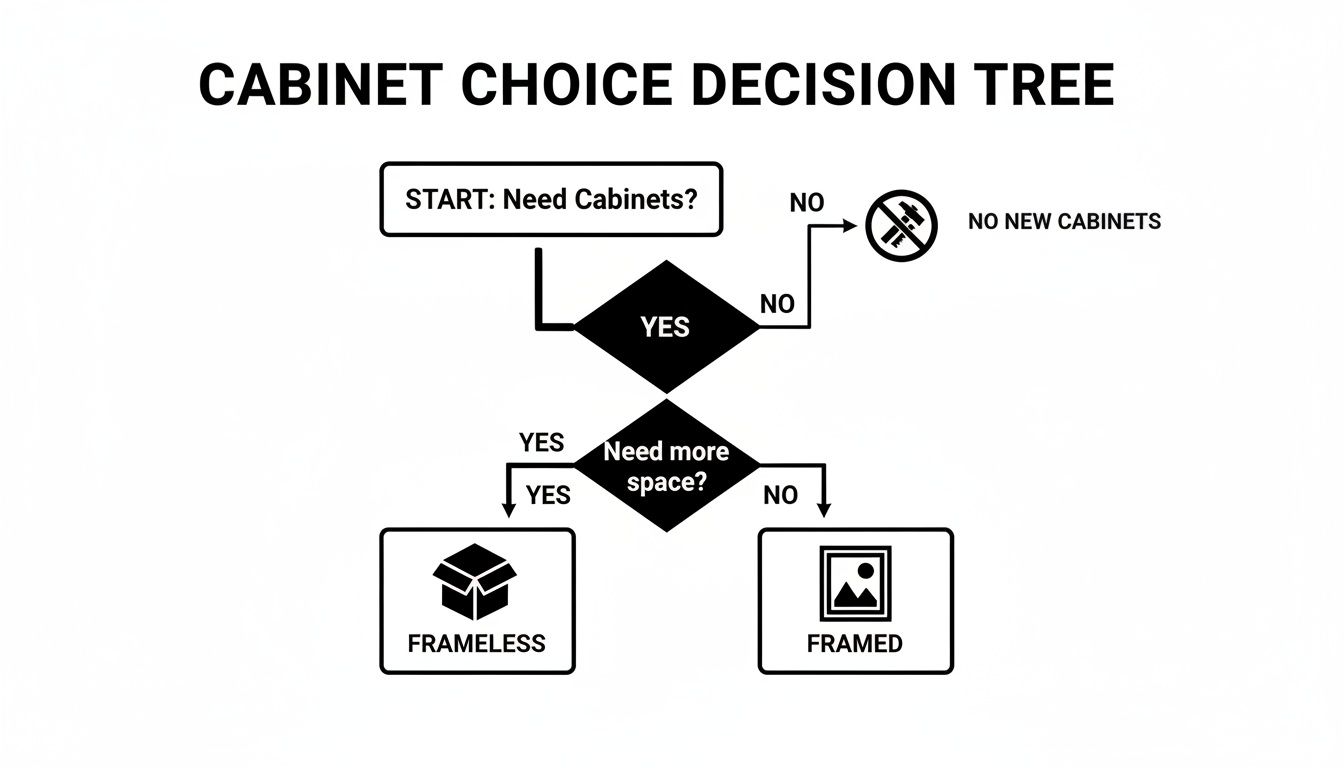
As you can see, if getting every last inch of storage is your top priority, frameless cabinets are almost always the way to go.
This is where frameless cabinets really pull ahead. Without a face frame getting in the way, you get what’s known in the industry as “full access” to the cabinet’s interior. This smart design can boost your usable storage space by a whopping 10-15% compared to a framed cabinet of the exact same size.
So, what does that extra space actually mean for you?
While a framed cabinet offers timeless charm, the frameless design focuses on pure function, ensuring every cubic inch of your cabinet is accessible and easy to use.
From a design perspective, these two cabinet types create completely different vibes in a room. Frameless cabinets, with their tiny gaps between doors and full-overlay style, deliver a sleek, seamless look. It’s perfect for modern, contemporary, and even transitional designs. The smooth, unbroken surfaces create a clean, uniform wall of cabinetry that can make a space feel bigger and more open.
Framed cabinets, however, offer a bit more stylistic flexibility. The frame itself becomes a design detail, and you can pair it with different door types—like inset, partial overlay, or full overlay—to achieve anything from a cozy farmhouse feel to a classic shaker look. If you’re going for a more detailed, layered appearance with a touch of traditional character, framed cabinets are a natural fit.
For more ideas, our complete guide on how to choose kitchen cabinets is packed with inspiration.
Sure, frameless cabinets look sleek and modern, but their real magic lies in the practical benefits they bring to your kitchen's day-to-day use. The biggest win? A serious upgrade in storage space. By getting rid of the front frame, these cabinets give you an instant and very noticeable boost in how much you can actually fit inside.
This isn't just a tiny tweak—it's a complete game-changer, especially if you're working with a smaller kitchen or just need to make every single inch count. The design unlocks valuable interior real estate that's normally wasted in traditional cabinets.
The whole point of frameless construction is to give you full access to the cabinet’s interior. Without a frame lip getting in the way, you can slide bigger items like stand mixers, bulky pots, or wide serving platters straight in. No more tilting and twisting them just to get them to fit. This smart design thinking applies to every part of the cabinet.
One of the best things about frameless cabinets is their incredible storage capacity. They offer 10-15% more usable interior space compared to their framed cousins, which is completely changing how pros design kitchens, especially in tight urban markets. When you ditch the face frame, doors can overlay the entire box and drawers can slide out all the way, letting you grab things from the very back without a hassle. For a closer look at the differences, check out this deep dive into the framed versus frameless debate on nextdaycabinets.com.
That extra space means you can finally fit in that extra set of dishes or find a home for the big air fryer that’s been hogging your counter space.
Another huge plus is how ridiculously easy frameless cabinets are to clean. We’ve all dealt with traditional framed cabinets—that little lip and the inside corners are magnets for dust, crumbs, and grime. Wiping them down properly is a real chore.
Frameless cabinets solve this problem completely. The inside is just a simple, smooth box with no sneaky crevices for gunk to hide in.
With no frame to work around, a quick wipe is all it takes to clean the entire interior surface. This simple design feature saves time and helps maintain a more hygienic kitchen environment.
All these practical perks add up to a kitchen that’s more functional and, ultimately, more valuable. The wider drawer boxes and clear, open shelves make everyday tasks feel smoother. You’ll spend less time digging around for what you need and more time enjoying your space.
These are the kinds of functional upgrades homebuyers love, which adds real, tangible value to your property. Here’s what you get:
Going with frameless cabinets is an investment in both looks and practicality. You're creating a kitchen that not only looks fantastic but also works beautifully for years to come.
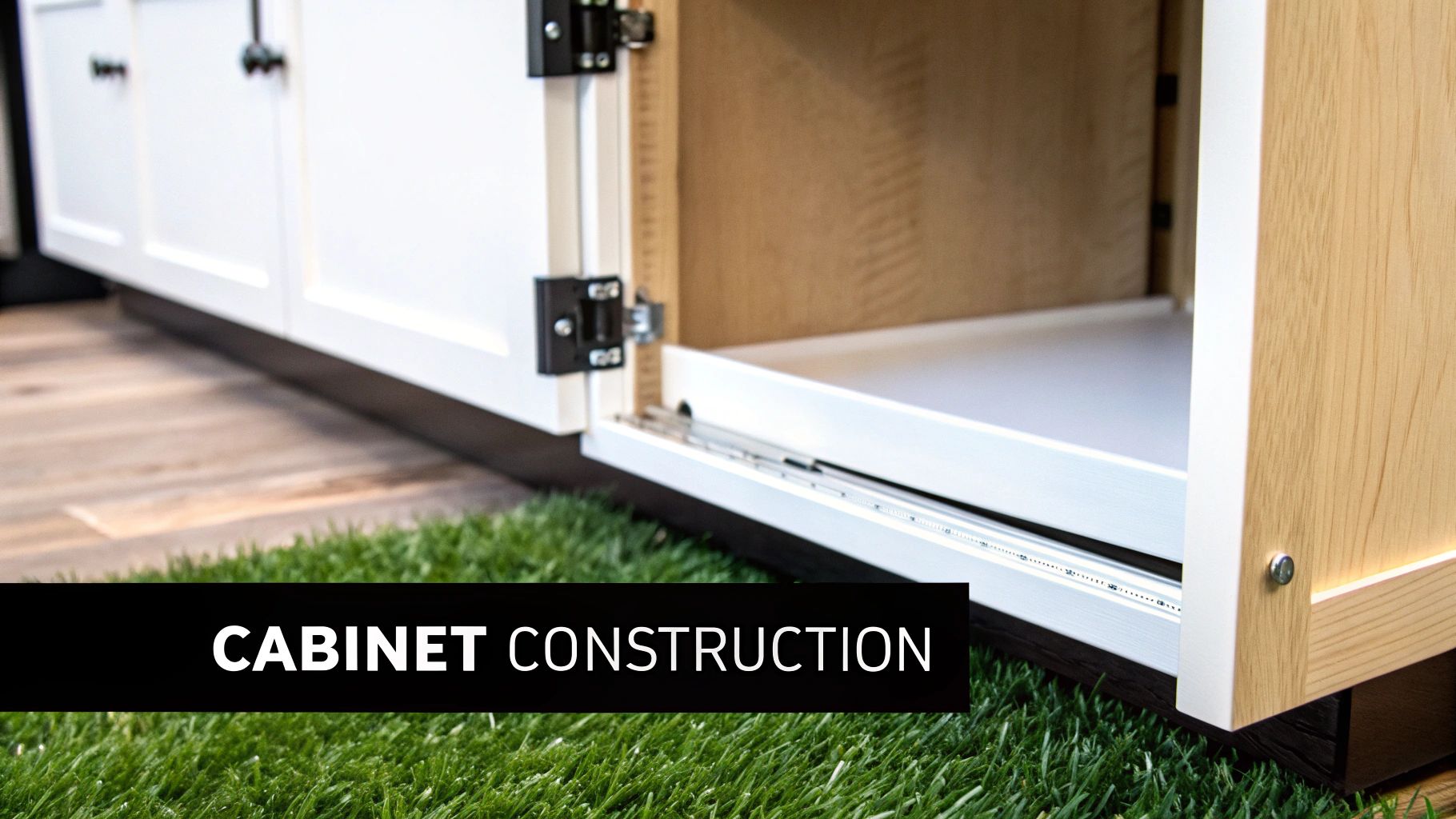
To really get what makes frameless cabinets tick, you need to look beyond the sleek doors and see how they’re put together. Their signature look and surprising strength come from a few key components working in perfect harmony.
Unlike traditional framed cabinets that get their rigidity from a front frame, the frameless design is all about the box. This means the structural load falls squarely on the cabinet box itself, so it has to be exceptionally sturdy.
You'll find that high-quality frameless cabinets are built from ¾-inch thick engineered wood or plywood. This beefier material ensures the cabinet stays perfectly square and can handle heavy countertops, stacks of dishes, and whatever else you throw at it without warping. Think of the box as the cabinet's skeleton—it provides all the support, so it has to be tough.
So, how do they get that seamless, uninterrupted look? It’s a clever combination of full-overlay doors and specialized hardware, all precision-engineered to create those clean, modern lines.
Here’s a quick breakdown of the core parts:
The whole system is built on precision. The tolerances are so tight that every single component has to be manufactured and installed with pinpoint accuracy. One small imperfection can throw off the clean lines and disrupt the entire look.
This absolute need for accuracy is what led to the 32mm system. This European manufacturing standard is the secret sauce behind the perfect alignment of frameless cabinets. It dictates that all the holes for hardware are drilled in a consistent grid, with each hole spaced exactly 32 millimeters apart.
This system guarantees that hinges, drawer slides, and other hardware line up perfectly every single time. It doesn't just make the manufacturing process more efficient; it also makes installation and any future adjustments a breeze. This level of precision is fundamental to what frameless cabinets are all about, ensuring every door hangs straight and every drawer glides smoothly for years to come.
The sleek, seamless look of frameless cabinets comes from their incredibly tight tolerances. This means precision during installation isn't just important—it's everything. Unlike framed cabinets that have a forgiving front frame to hide minor imperfections, frameless designs show every single mistake.
The most common hurdle is getting the cabinets perfectly level (front to back and side to side) and plumb (perfectly vertical). Even a tiny error can make doors hang crookedly or create uneven gaps, completely disrupting the clean lines you're after. The key is to start with a laser-sharp level line and use shims meticulously under each cabinet to get perfect alignment before you even think about securing them to the wall.
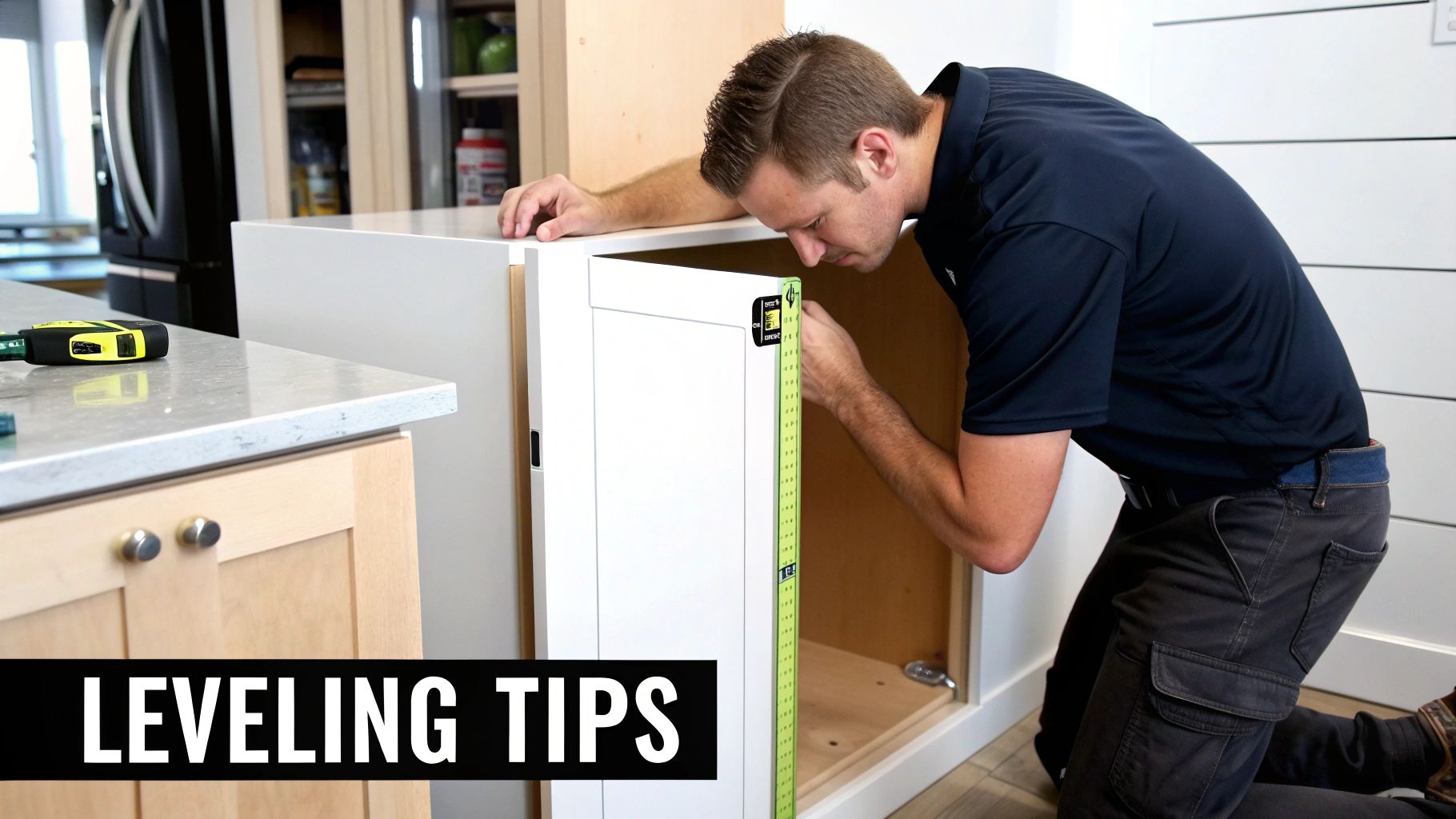
Another critical issue installers run into is "racking." This is what happens when a cabinet box gets forced out of its perfect square shape during installation. It’s usually caused by screwing the cabinet too tightly to an uneven wall, which pulls the box out of alignment and stops doors and drawers from closing correctly.
To avoid this, always check that your box is square by measuring diagonally from corner to corner. The two measurements should be identical. If they aren't, use shims to fill any gaps between the cabinet back and the wall before driving in the screws. This ensures the cabinet remains square and true, independent of the wall behind it.
The rule of thumb for frameless installation is simple: shim for gaps, don't screw to close them. Forcing the cabinet to conform to an imperfect wall is the fastest way to ruin the alignment and functionality of your new kitchen.
Because frameless doors cover the entire cabinet front, the edges of the cabinet box are more exposed than on a framed cabinet. This makes high-quality edge banding absolutely essential. This thin strip of material seals the raw edges of the cabinet panels, protecting them from moisture, chips, and the wear and tear of daily life.
Without proper edge banding, even a small spill could cause the underlying material to swell and delaminate, permanently damaging the cabinet. When buying frameless cabinets, always confirm the edge banding is made from a durable material like PVC or ABS and has been applied with a strong, moisture-resistant adhesive. This small detail makes a huge difference in how long your cabinets will last.
For a detailed walkthrough, check out our guide on how to install kitchen cabinets.
Jumping into a cabinet project without a clear plan is a recipe for disaster. When you’re buying frameless cabinets, a few key steps will guarantee you get the quality and look you've envisioned, all while sidestepping costly mistakes. The whole process, from taking precise measurements to confidently placing your order, can be surprisingly manageable when you know what to do.
It all starts by arming yourself with the right questions. Having a simple checklist ready for any supplier empowers you to compare your options effectively and make sure you’re getting durable, well-made products. Don't be shy about digging into the specifics—after all, it’s your investment.
Before you sign on the dotted line, make sure you get clear answers on these critical points. The details really matter, especially when dealing with the tight tolerances required for frameless cabinet construction.
The trend toward frameless cabinets is growing fast, right alongside ready-to-assemble (RTA) systems. This shift has put suppliers like Cabinets4sure at the heart of the market for savvy builders and flippers. With modular layouts becoming the top choice for over half of new homeowners, the full-access design of frameless cabinets is a perfect fit. They're easier to ship flat-packed and a breeze to install on-site. This makes getting that sleek, modern look incredibly straightforward, especially with services like free 3D plans based on your measurements, professional assembly options, and nationwide shipping. You can dive deeper into cabinet market trends at The Farnsworth Group.
Once you've vetted your supplier and feel confident, the final steps are pretty simple. Double-check all your measurements one last time, confirm your layout looks perfect in the 3D design they provide, and review every single item on your quote. This careful, methodical approach ensures your project starts off on the right foot. For more great advice, check out our homeowner's guide to ready-to-assemble cabinets.
Thinking about frameless cabinets often sparks a few questions. Getting straight answers is the best way to figure out if this clean, modern style is the right move for your project. We’ve rounded up the most common questions we hear to help clear things up.
Not at all. While it’s true that framed cabinets get extra rigidity from a solid wood face frame, high-quality frameless cabinets are built to last. They make up for the lack of a frame with thicker box construction, typically using ¾-inch plywood or another premium engineered wood.
When they’re put together and installed correctly, these cabinets are incredibly sturdy and easily meet industry standards for strength. It all comes down to the quality of the materials and the precision of the installation.
Absolutely. Even though frameless cabinets are a go-to for modern and contemporary designs, the cabinet box itself is a blank canvas. You can easily create a beautiful traditional or transitional look just by picking a door with a bit more detail, like a classic Shaker profile.
Pairing a frameless base with traditional hardware, classic countertops, and some elegant crown molding is the perfect way to blend modern function with timeless style.
The final cost is often very similar to framed cabinets, but it really depends on the materials, finish, and brand you choose. In some cases, frameless cabinets can even be more budget-friendly because they use less raw material (since there’s no face frame).
However, they do require more precise manufacturing, which can affect the price. Ready-to-assemble (RTA) frameless options are a fantastic way to get that high-end, seamless look while keeping your budget in check.
Ready to bring the sleek, spacious design of frameless cabinets to your home? At Cabinets4sure, we make it easy. Email us your measurements for a free 3D design and a detailed quote. Explore our collection and start your project today at https://www.cabinets4sure.com.