REQUEST AN ESTIMATE TODAY! CONTACT
GALLERY
MY ACCOUNT


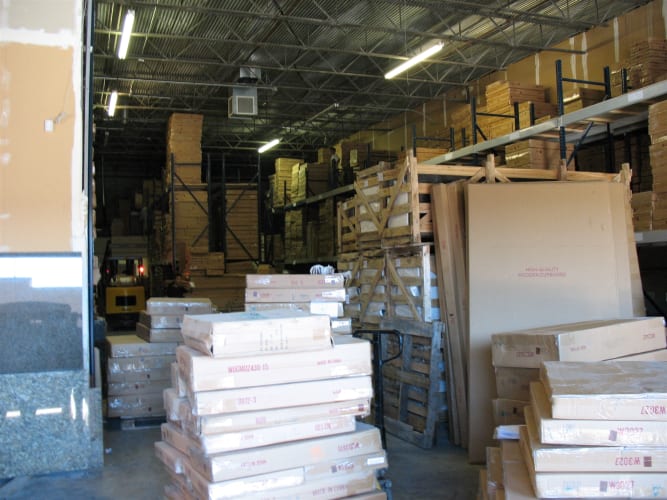
So, are RTA cabinets actually good quality? The honest answer is yes, but you absolutely have to know what to look for. The flimsy reputation of old-school flat-pack furniture is a thing of the past. Today’s best RTA cabinets use the same high-quality materials and construction methods you’d find in their pre-assembled counterparts.
Ready-to-assemble (RTA) simply describes how the cabinets are delivered—it's not a statement about their quality. Think of it like buying a high-end bicycle. You can get it fully assembled from a showroom, or you can have the exact same premium components shipped to your door to build yourself. Either way, the bike's performance comes down to the quality of those original parts.
This smart approach has really taken off with homeowners and contractors. In fact, RTA cabinets captured a solid 24% share of the U.S. residential cabinets market in 2021. That's a huge testament to their growing appeal, especially for budget-conscious remodels where every dollar counts.
So, how do you tell the difference between a durable, beautiful cabinet and one you’ll regret installing? The secret is to look right past the "RTA" label and focus on the fundamentals. A high-quality RTA cabinet will always be built with superior materials and solid construction.
To help you spot the good stuff, here's a quick cheat sheet comparing high-end features with their low-quality counterparts.
Knowing these distinctions gives you an immediate advantage when shopping and ensures you're investing in cabinets built to last.
The term "RTA" doesn't define the cabinet's potential; it defines your opportunity. It shifts a portion of the labor cost into sweat equity, allowing you to access higher-grade materials for the same budget as a lower-quality pre-assembled option.
Understanding these differences is the first step toward a successful project. To get a better handle on the basics, check out our comprehensive homeowner's guide to ready-to-assemble kitchen cabinets. This foundational knowledge will empower you to shop with complete confidence.
Think of a quality cabinet like a well-built house. It doesn’t rely on just one strong feature; it needs a solid foundation, a sturdy frame, reliable fixtures, and a protective exterior. For RTA cabinets, these elements translate into four pillars of quality: materials, construction, hardware, and finish.
Getting a handle on these four areas is the secret to knowing if a cabinet is built to last or destined for disappointment. Let's cut through the jargon and get straight to what actually matters for your home.
The material used for the cabinet box, or "carcass," is its foundation. If that foundation is weak, everything else on top of it is compromised from day one. In the RTA world, you'll really only run into two main options for the cabinet box.
All-Plywood Construction: This is the gold standard, plain and simple. Plywood is made from thin layers of wood veneer glued together, with the grain of each layer running perpendicular to the one below it. This simple trick gives it incredible strength and makes it highly resistant to warping from moisture—a real game-changer in a kitchen or bathroom.
Particleboard (or Furniture Board): This is the budget alternative, made from wood chips and sawdust pressed together with resin. While it keeps costs down, it's a huge step down in durability. Particleboard is like a sponge around moisture; a small leak under the sink can cause it to swell up and literally crumble. It also doesn't hold screws nearly as well, which is why you see sagging shelves and wobbly hinges so often with cheaper cabinets.
Key Takeaway: If you want cabinets that will look and feel solid for years to come, all-plywood construction is non-negotiable. It’s the single biggest difference between a high-quality RTA cabinet and one you'll regret installing.
If materials are the foundation, construction is the framing that holds it all together. The way the pieces are joined determines if your cabinets can handle the daily grind of a busy household. For drawers, the only method you should accept is dovetail joinery.
This interlocking technique creates a rock-solid bond that’s been a hallmark of fine furniture for centuries. It's a clear sign that the manufacturer didn't cut corners.
The cheap alternative? Drawers held together with staples, glue, or flimsy dowels. These joints are fast and easy to produce, but they’re also the first thing to fail after a few years of being opened and closed a thousand times.
Hardware is where you feel the quality of your cabinets every single day. It’s the hinges that swing the doors and the glides that let the drawers slide. Skimping here is a recipe for daily frustration—slamming doors, sticky drawers, and constant adjustments.
For a true quality-of-life upgrade, make sure your cabinets include these features:
Soft-Close Hinges: These are a must-have. A tiny hydraulic mechanism built into the hinge prevents doors from ever slamming shut. It's a small detail that makes your kitchen feel more peaceful and protects the cabinet frame from wear and tear.
Full-Extension, Soft-Close Drawer Glides: Full-extension glides let you pull the drawer all the way out, so you can actually see and reach what's in the back. The soft-close feature ensures it slides shut smoothly and silently with just a gentle push. Look for under-mount glides—they’re hidden from view and provide a much more stable and satisfying motion.
Finally, the finish is your cabinet’s first line of defense and its biggest style statement. A great finish is about way more than just color; it’s about durability. The best RTA cabinets go through a multi-step finishing process where several layers of paint or stain are applied and then baked on.
This creates a tough, resilient surface that can stand up to chipping, scratches, and the inevitable spills of a busy kitchen. In contrast, a cheap finish might just be a thin coat of lacquer that wears away quickly, leaving the wood underneath exposed to damage.
The global market for ready-to-assemble furniture, including cabinets, hit USD 29.1 billion in 2024 and is expected to climb to USD 41.2 billion by 2030. This boom is happening because homeowners are discovering that high-quality RTA options with premium materials and finishes now rival custom-built cabinets. To learn more, check out these insights on the growth of the RTA furniture market.
To really get a feel for what makes a quality RTA cabinet, it helps to see where they sit in the bigger picture. When you're planning a kitchen remodel, you're usually looking at three main paths: ready-to-assemble (RTA), pre-assembled stock cabinets from the big-box stores, and fully custom cabinets built from scratch by a local shop.
Each one is tailored for a different budget, timeline, and level of creative control. Think of it like this: custom cabinets are a private chauffeur service, pre-assembled stock cabinets are the city bus, and RTA cabinets are a high-performance rental car. With RTA, you get premium features and full control, but you’ve got to do the driving yourself.
The main differences really come down to a balancing act between cost, speed, and personalization.
Pre-assembled cabinets are all about speed and simplicity. You walk into a store, pick them out, and you’re good to go. The catch? You're often compromising on materials, and the style and size options are extremely limited. You get what you see, and you'll probably need to use a bunch of filler strips to make them fit your space, which rarely looks seamless.
On the other end of the spectrum, custom cabinets offer total design freedom. They're built millimeter-perfect for your kitchen, using any material or finish you can dream up. But that level of personalization comes with a hefty price tag—often two to three times more expensive than RTA—and lead times that can easily stretch for months.
This simple decision tree helps visualize the very first question you should be asking when you’re looking at cabinets: what’s it made of?
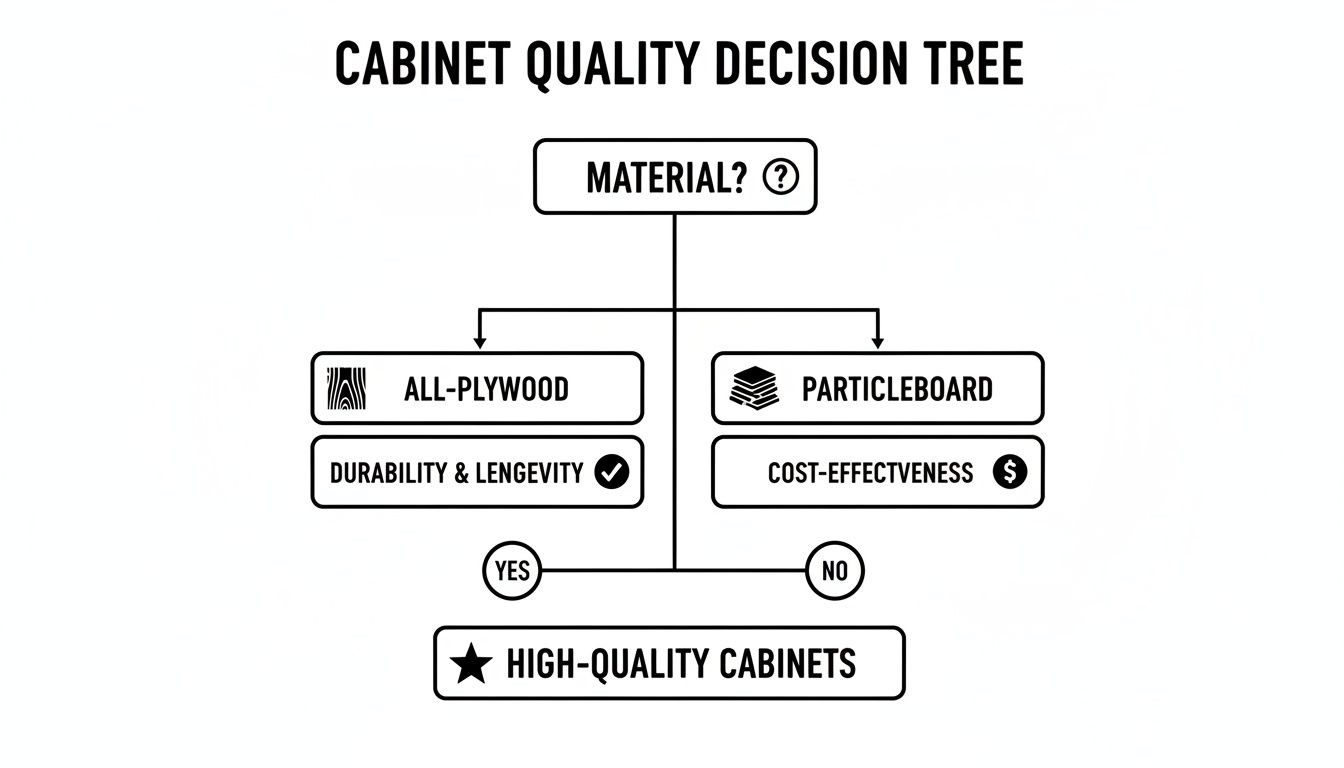
As you can see, starting with all-plywood construction immediately puts you on the path toward long-term durability, which is the cornerstone of a quality cabinet.
This is where high-quality RTA cabinets shine. They deliver a near-custom fit and finish using premium materials like all-plywood boxes and solid wood doors, but at a price point that’s much easier to swallow. The "sweat equity" you put in to assemble them is what closes that gap, giving you access to higher-grade cabinets for a stock-cabinet budget.
The numbers back this up. North America commands 40.5% of the global cabinet market, and with 1.5 million U.S. home starts in 2023, RTA's growing 24% market share is a clear sign that homeowners and pros are catching on. If you're curious, you can dig deeper into the competitive cabinet market landscape.
The Takeaway: Choosing RTA isn't about compromising on quality; it's a strategic move. You trade a few hours of assembly for huge cost savings, all without giving up the durable materials and beautiful designs that make a kitchen feel high-end.
To make the choice even clearer, let's break down how these three options stack up side-by-side.
This table shows that RTA cabinets have carved out a powerful niche. They offer a fantastic balance of quality, customization, and cost for anyone who doesn't mind rolling up their sleeves.
This balance is what makes RTA such an ideal solution for homeowners and contractors who demand quality materials and a polished look without the crazy costs and delays of custom work. And while we’re big fans of RTA, it’s worth understanding the quality markers in pre-assembled options too, so you can make a truly informed decision for your project.
Knowing what makes a good cabinet is one thing, but actually spotting it in the wild is a completely different skill. Think of this as your field guide to becoming a savvy RTA cabinet shopper.
With just a few simple inspection techniques, you can confidently tell a premium product from a potential headache, whether you're browsing online or holding a sample in your hands.
The single best way to judge quality is to get your hands on a sample door. Pictures online can be touched up and descriptions can be misleading, but a physical sample tells the real story.
When it arrives, give it a quick once-over:
This small investment up front can save you from a major disappointment down the road. It’s your best possible preview of the craftsmanship you can expect from a full order.
While not the only measure of quality, certain benchmarks can give you a solid baseline. Look for the KCMA (Kitchen Cabinet Manufacturers Association) certification. This means the cabinets have survived a battery of tough tests that simulate years of real household use, checking everything from structural integrity to finish durability.
Next, dig into the warranty. A manufacturer that truly stands behind its product will offer a strong warranty, often for 10 years, 20 years, or even a lifetime.
Read the fine print, always. A "lifetime" warranty that only covers raw material defects but not the finish or hardware isn’t as great as it sounds. Make sure you understand what's actually covered before you commit.
Customer reviews offer a goldmine of real-world insights, but you have to know how to read them. Skip the generic five-star ratings and look for reviews that get into the specific details.
Pay close attention to what people say about:
These detailed stories from other homeowners are your best source of unbiased truth. By combining this social proof with your own hands-on sample inspection, you’ll have all the confidence you need to make a fantastic choice.
A great RTA cabinet project is as much about dodging common pitfalls as it is about picking the right product. Knowing where other renovators have stumbled can save you a world of frustration and buyer’s remorse, ensuring a smooth ride from purchase to a beautiful, finished kitchen.
One of the most frequent mistakes is letting price be your only guide. Yes, RTA cabinets are famous for being budget-friendly, but an unbelievably low price is often a warning sign. It usually points to cheap materials like particleboard. Always, always prioritize all-plywood construction over saving a few extra bucks. You're looking for long-term value, not just a short-term bargain.
Another classic blunder is underestimating the assembly itself. While top-quality RTA systems are designed for a pretty straightforward build, it’s not an "instant kitchen." The initial excitement of a remodel can quickly fade if you're not prepared for the hands-on work involved.
You can sidestep this common problem with a little bit of homework before the boxes even land on your doorstep. A smart, simple move is to watch the manufacturer's assembly videos. This gives you a real-world preview of the process and shows you exactly which tools you’ll need.
A few key steps can prevent major headaches down the road:
By learning from the missteps of others, you can tackle your project with confidence. A little prep work goes a long way in turning a potentially stressful job into a deeply rewarding one.
To get a crystal-clear idea of what you’re getting into, check out a company's assembly video library. It’s an incredibly useful tool for gauging the difficulty and planning your time, so you know exactly what the project will demand.
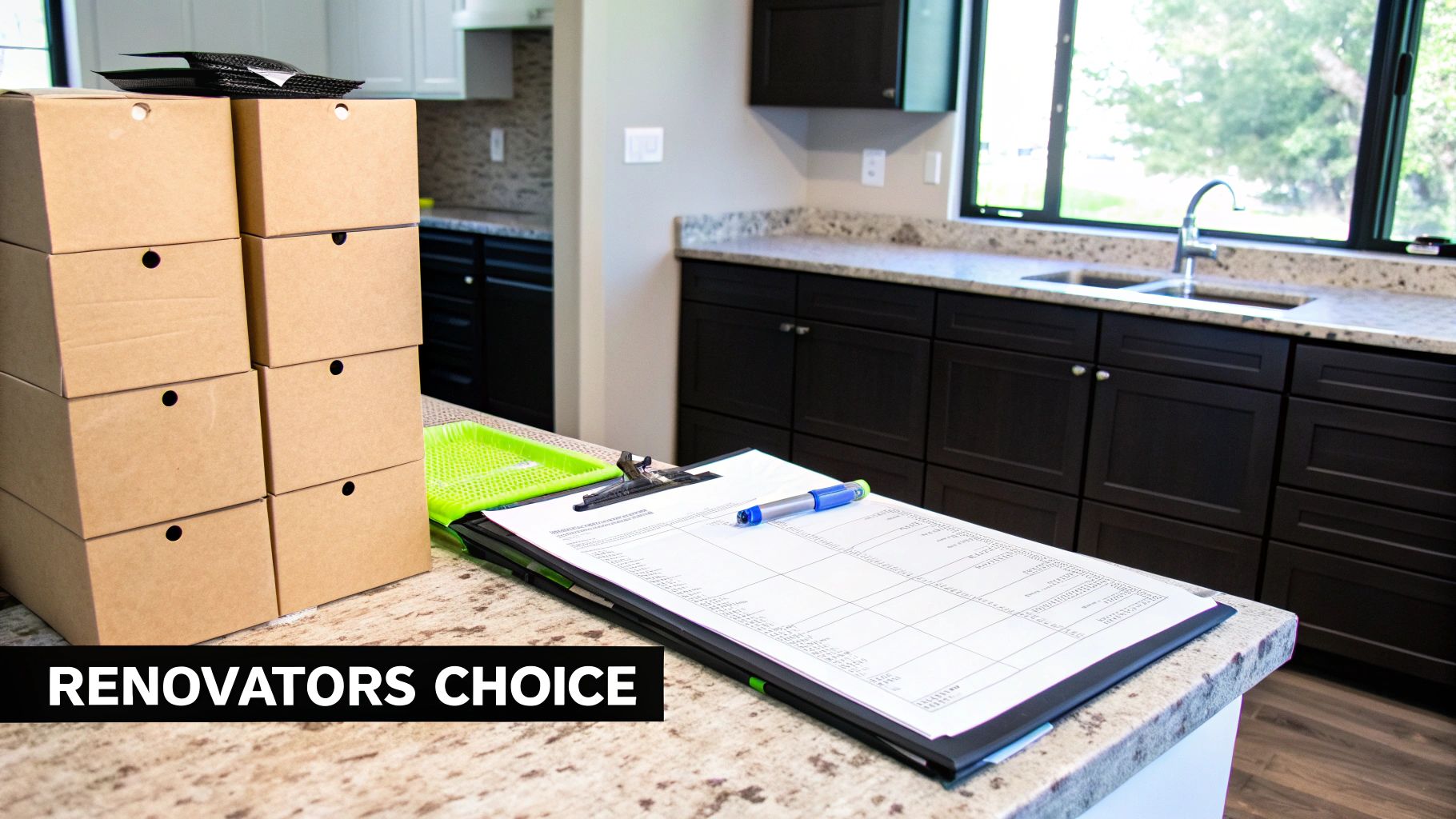
At the end of the day, seasoned contractors, ambitious DIYers, and savvy house flippers all arrive at the same conclusion. High-quality RTA cabinets hit every mark on a professional's checklist, offering an unbeatable mix of speed, style, and value.
Think of it as the ultimate project accelerator. Fast shipping gets your materials on-site right when you need them, keeping your timeline on track. The predictable costs give you precise control over your budget, getting rid of the nasty financial surprises that can completely derail a renovation.
This is exactly why so many experienced builders opt for RTA solutions. They get that high-end, custom-kitchen look that boosts property value and impresses clients or buyers—all without the steep price tag or long wait times that come with custom cabinetry. It's all about working smarter, not harder.
Most importantly, durable materials like all-plywood boxes and solid wood doors deliver the reliability you need for an investment that truly lasts.
So, are RTA cabinets good quality? The answer is a definite yes, but with one major catch: quality is a choice you make, not something that’s guaranteed. When you focus on the right materials, construction, and hardware, you end up with a beautiful, durable kitchen that looks just as good as its much more expensive counterparts.
When you make a smart decision based on the factors we've covered, you really do get the best of all worlds. You get a stunning final result that proves to be a fantastic investment in your home's future.
Even with all the details, you probably still have a few burning questions. Let's tackle the most common ones we hear from homeowners, so you can move forward with total confidence.
This is the big one. You want to know if you're making a smart long-term investment. The great news is that a high-quality RTA cabinet, made with all-plywood construction and solid wood doors, can easily last 20 to 30 years. That's right on par with custom cabinets that cost a fortune.
Ultimately, its lifespan comes down to two things: the quality of the materials you start with and how well you take care of them over the years.
For most people who are comfortable with basic tools, the assembly process is surprisingly straightforward. The best RTA cabinet brands design their products for homeowners, using simple cam-lock and bracket systems that are very user-friendly.
Here's a pro tip: before you even think about buying, watch an assembly video from the manufacturer. It’s the best way to get a real feel for the process and honestly decide if it’s a good fit for your skill level.
Absolutely. Let's bust that old myth right now—RTA does not mean cheap-looking. Today's premium RTA lines come loaded with all the features you'd expect to see in a designer kitchen.
You can easily find sophisticated options to create a stunning space, like:
When you choose quality materials and get the installation right, even a design pro would have a hard time telling the difference between high-end RTA cabinets and their custom counterparts.
Ready to see how high-quality RTA cabinets can transform your kitchen? Explore the incredible selection of durable, stylish, and affordable options at Cabinets4sure. Get your free 3D kitchen design today and start bringing your dream kitchen to life.